Pay Per Click Accountability
Every Click Has a Price. Make Sure It Has a Point. Every dollar your business spends on Google Ads should be working overtime. Pay-per-click...
Nov 15, 2021 · ~12 min read
Fraud prevention and detection solutions using behavioral analytics, machine learning, and real-time monitoring. Protect against account takeover, payment fraud, and identity theft.
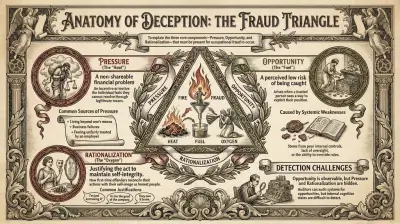
Pressure (or Motive) | Opportunity | Rationalization | These are the three sides to the fraud triangle.
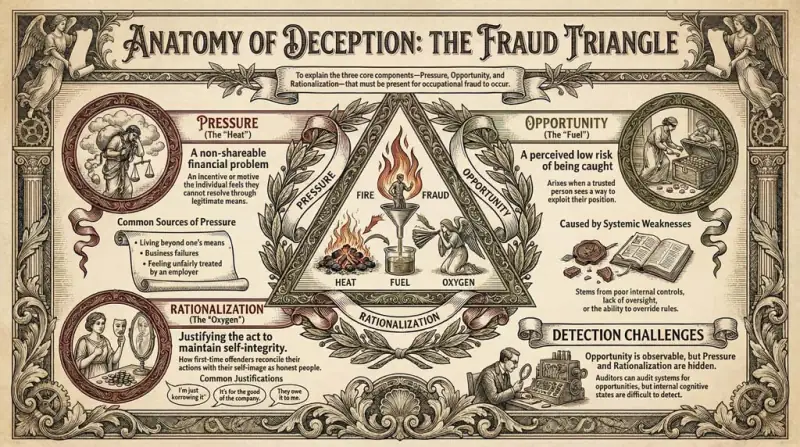
Pressure (or Motive) represents an incentive to commit fraud which is defined as a non-shareable financial problem. These are obligations that a person feels they cannot share with others or resolve through legitimate means without social or professional ruin. According to a criminologist named Donald Cressey, these problems can be categoriezed into six types, including status gaining (living beyond one's means), business reversals (uncontrollable failures), and employer-employee relations where the individual feels unfairly treated.
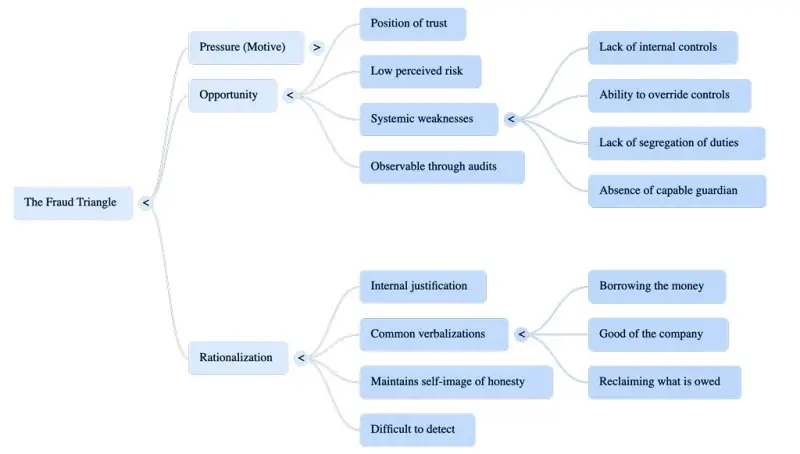
Opportunity is the "fuel" that allows the spread from the motive. When a person exploits a position of trust with a low risk of being caught. This typically stems from the ability to override existing controls of a vunerable target.
Rationalization
Because most fraudsters are first-time offenders who view themselves as honest, ordinary people, they must justify the act to themselves to maintain their integrity. They apply "verbalizations" to their conduct, such as convinced themselves they are merely "borrowing" the money, that the act is for the "good of the company," or that they are simply reclaiming what they are "owed" due to unfair treatment.
While auditors can often observe the Opportunity side of the triangle through system audits, Pressure and Rationalization are internal cognitive states that are notoriously difficult to detect until the "fraud" is already well underway.
A client's Google Ads kept collecting clicks while the customers stopped showing up. This five-minute walkthrough filters the web server logs by gclid, the click ID Google Ads adds to the URL, and puts each one next to its IP address in a Google Sheet. At 2:30 one gclid appears under three different IP addresses. From 3:46 the server admin gets the log filter that builds the report. For an owner: your own server logs can show whether the clicks you paid for were customers.
A short one at 82 seconds. It opens on a disclaimer that the material is meant for protecting your own identity, then at 0:48 states the risk: details exposed through virtual business cards can lead to data breaches and unauthorized access. The list at 1:00 names what can follow, from phishing and impersonation to data leaks, lost trust and legal trouble. If your team hands out digital cards, search for their links in a search engine before a stranger does.
TeleSign turns the phone number into a fraud detection powerhouse by mining inte...
HUMAN Security draws a hard line between authentic human traffic and everything...
ZeroFox protects organizations in the digital spaces that traditional security t...
Protect your Google ads and websites with the best-in-class solution Block harmf...
Every Click Has a Price. Make Sure It Has a Point. Every dollar your business spends on Google Ads should be working overtime. Pay-per-click...
Nov 15, 2021 · ~12 min read
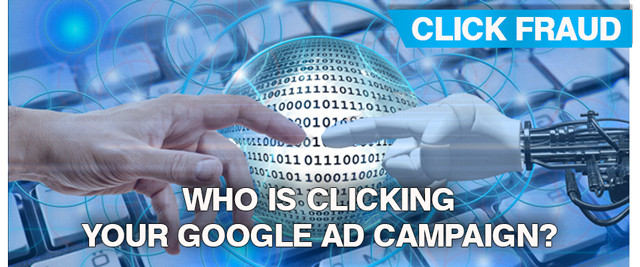
Why is a GCLID important and how is it used? A GCLID string of characters is the key to following the money trail for pay-per-clicks. A Google...
Nov 17, 2021 · ~2 min read

Google Ads Paid Search Paid search for ad targeting will produce more revenue when eliminating click fraud. As a preventative low-cost measure, I'll...
Nov 18, 2021 · ~3 min read